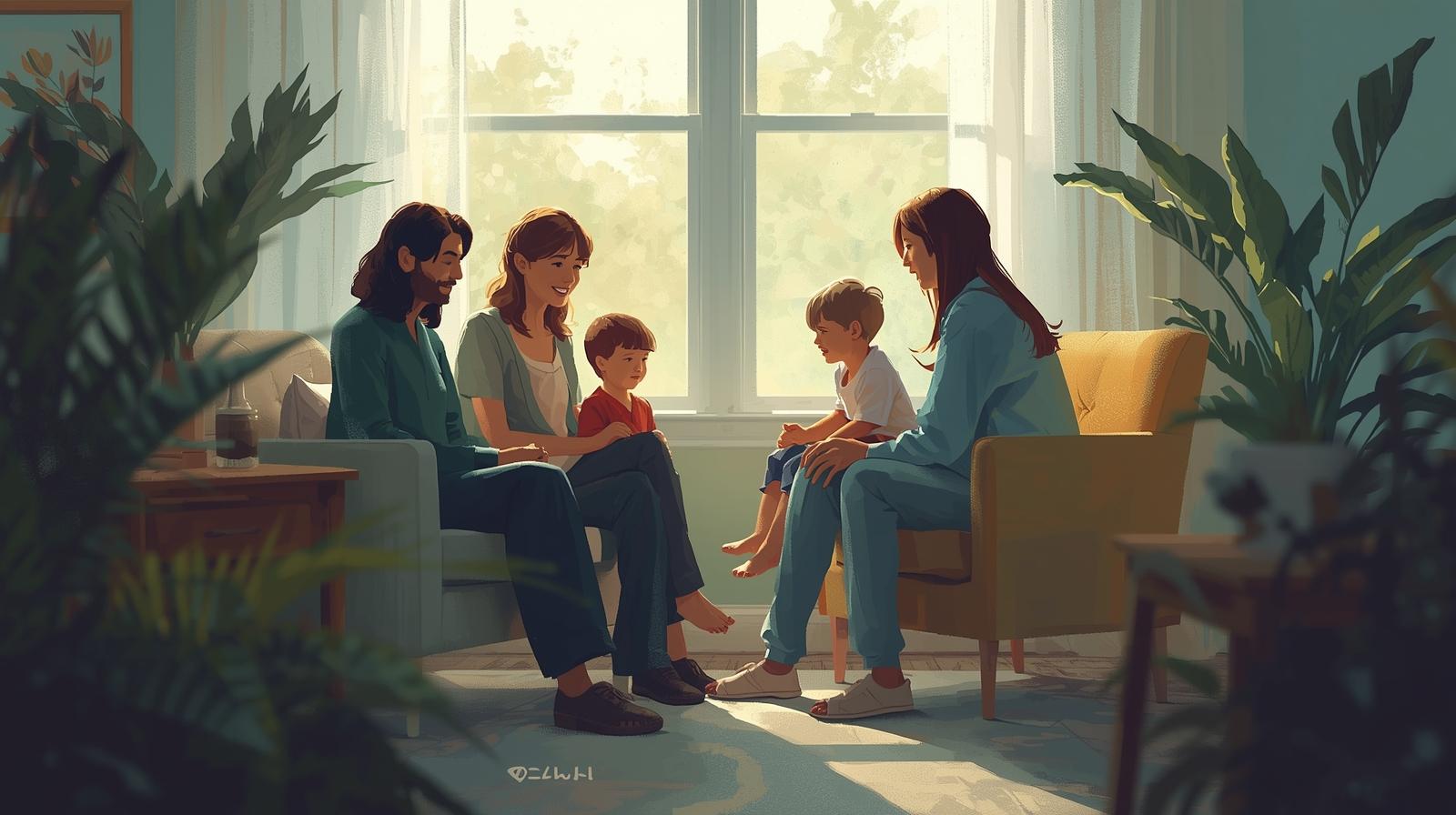
(Scene Open: A quiet, sunlit room with comfortable chairs. The tone is calm, reassuring, and professional.) Narrator: Welcome. You’ve taken the most difficult step—facing a crisis, completing an intensive treatment, or acknowledging that a relationship is under strain. But what happens next? The path to lasting wellness isn't a single event; it's a landscape we learn to navigate. Today, we explore two essential guides for that journey: Aftercare Programs and Family/Couple Counseling. (Visual: A winding path through a forest, transitioning from dense fog into clearer light.) Narrator: Let's begin with Aftercare. PART 1: AFTERCARE PROGRAMS – THE ARCHITECTURE OF LASTING RECOVERY Narrator: Imagine you've just spent weeks building a strong, resilient house within yourself during residential treatment or detox. An Aftercare Program is the blueprint that ensures that house doesn't weather and crumble when you return to the winds and rains of daily life. It is not passive "follow-up"; it is active, structured continuity. Explicitly, it is: The Safety Net: A scheduled, non-negotiable touchpoint—often weekly or bi-weekly group sessions—that prevents the isolation where relapse breeds. You are not discharged into silence; you are graduated into a circle of ongoing support. Skill Translation: It’s where you practice the coping mechanisms you learned in vitro—mindfulness, urge surfing, emotional regulation—in the real world. You bring back stories: "A trigger happened at work, and here’s how I used my toolkit." The group and counselor help you refine it. Relapse Prevention Planning: We get explicit about danger. We identify your personal high-risk scenarios (certain social circles, specific emotions, family stress) and co-write a step-by-step protocol: "If I feel X, I will first do Y, then call Z." It turns panic into a manageable procedure. Accountability & Momentum: Recovery momentum can fade. Regular aftercare sessions create gentle, firm accountability. You report on your progress, your challenges, and your adherence to other recommendations, like attending 12-step meetings or seeing an individual therapist. Long-Term Resource Navigation: It helps you rebuild the practical pillars of life: connecting you with vocational support, legal aid, sober living arrangements, and primary healthcare doctors who understand your journey. We transition you from patient back to citizen, but with fortified defenses. (Visual: A bridge being built, plank by plank, from a clinical setting to a vibrant community.) Narrator: In essence, aftercare is the critical bridge between the protected treatment environment and a self-directed, thriving life. It says, "Your healing is still our priority." (Scene Transition: The camera moves to a different, cozy room with two couches facing each other. A box of tissues sits on a small table.) PART 2: FAMILY / COUPLE COUNSELING – THE LINGUISTIC SURGERY OF RELATIONSHIPS Narrator: Now, let’s step into a different space. Here, the focus isn’t on an individual’s internal architecture, but on the connection between people. Whether it’s Family Counseling or Couple Counseling (Marital Therapy), this is where we perform linguistic and emotional surgery on damaged bonds. First, let's be explicit about Family Counseling: Narrator: Addiction, mental illness, or trauma is not a solo act; it’s a family system disorder. The patient may have been the "identified" one, but everyone is wounded, locked in roles: The Enabler, The Hero, The Scapegoat, The Lost Child. It is Psychoeducation: We explicitly teach the family the science of the condition—how addiction hijacks the brain, how depression isn't laziness, how trauma rewires responses. This replaces blame with understanding. It is Detoxifying Communication: We stop the cycle of accusations ("You always...") and devastating criticisms. We introduce structured communication: "When you do X, I feel Y, because I need Z." We practice listening to understand, not to rebut. It is Boundary Setting: We move from entangled, reactive chaos to healthy, proactive boundaries. We role-play: How does a parent say, "I love you, but you cannot stay here if you are using"? How does a sibling support without carrying the burden? We write these scripts together. It is Healing the Collective Wound: This is the space for the shared hurt to be voiced—the broken promises, the fear, the anger—but in a container moderated by a professional who prevents re-traumatization. It’s about moving from a wounded family to a healing team. (Visual: A tangled knot of strings slowly being untangled into separate, but connected, lines.) Narrator: Now, for Couple Counseling: Narrator: The dynamic is more concentrated, the intimacy deeper, the wounds often more precise. Here, the work is on the dyad, the unit of two. It is Creating a Secure Base: We establish the therapy room as a neutral, safe territory. A ceasefire zone. No shouting, no walking out. Here, you can say the hard thing because the therapist ensures it is heard and translated. It is De-escalating Conflict: We dissect your cycle of conflict with brutal clarity. "You, John, tend to criticize. That makes you, Maria, stonewall. Which makes John criticize louder. Let's stop this dance at step one." We give you a map of your own battlefield. It is Restoring Intimacy & Trust: We go beyond "fighting better." We explicitly rebuild connection. We assign exercises: "This week, practice making one non-demanding, affectionate contact per day." "Share one vulnerability without your partner fixing it, just acknowledging it." For infidelity or betrayal, we structure a meticulous, voluntary process of transparency, accountability, and, if chosen, forgiveness. It is Aligning Vision: We often find couples are fighting because they’re on different pages of life’s book. We facilitate explicit conversations about needs, values, sex, finances, and parenting goals. We help you write a shared narrative for your future. (Visual: Two separate trees, leaning apart, are gently guided to grow stronger, their branches intertwining for support.) CONCLUSION: THE INTERCONNECTED PATH (Final Scene: The two rooms—the aftercare group circle and the counseling room—merge in a split-screen, then fade into a single image of a person smiling, with supportive family members beside them.) Narrator: These services are not isolated. They are powerfully interconnected. An individual in Aftercare stabilizes their recovery. Family Counseling heals the system they return to, removing toxic dynamics that could undermine progress. Couple Counseling strengthens the primary partnership, creating a pillar of support rather than a source of stress. Ultimately, this is the explicit promise: We do not just treat a symptom or discharge a patient. We provide the ongoing structure for individual resilience and we facilitate the relational repair necessary for a truly healthy, sustainable life. This is the work of building not just a recovering person, but a recovering world around them. Your next chapter begins not with an end, but with continued, guided support.
1500 Coral Way, Miami, Fl 33145

© Copyright 2024 Restan. All Rights Reserved
 Phone: 786-536-2364
  Email: wellnessareusa@gmail.com